
What Determines Your Google Maps Rankings?
Google Maps rankings are determined by a combination of factors that measure your relevance to the search, your prominence in the market, and your proximity to the searcher. Understanding these factors lets you focus your local SEO efforts where they matter most.
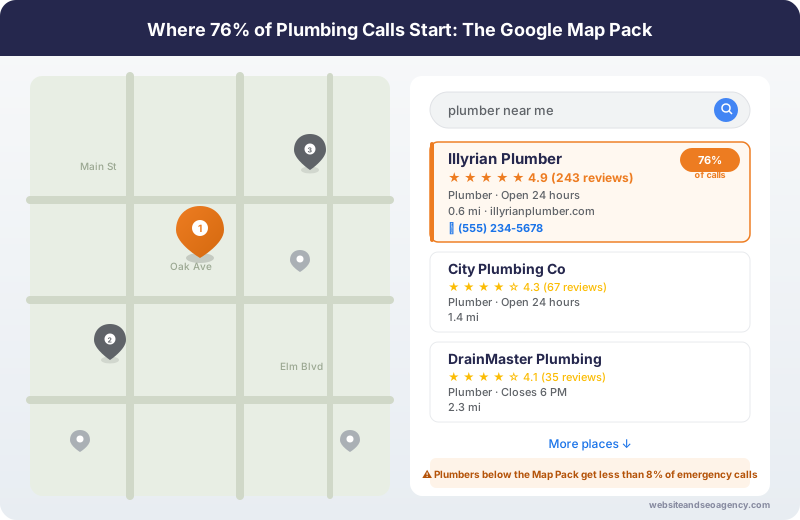
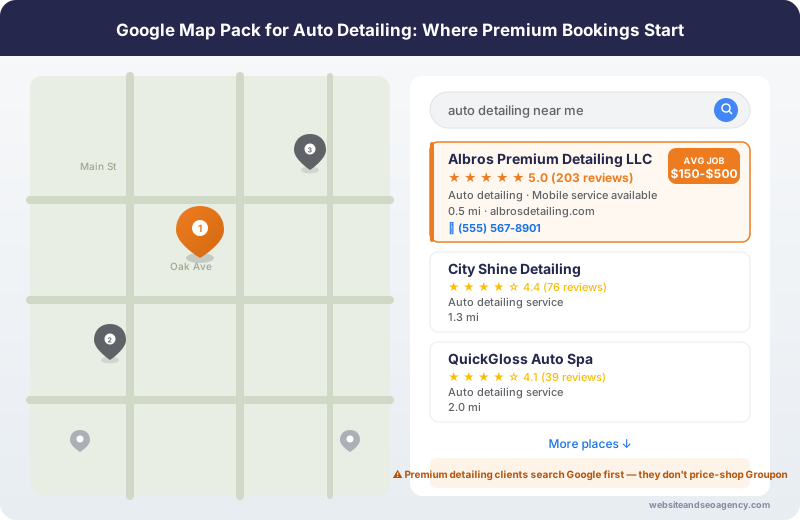
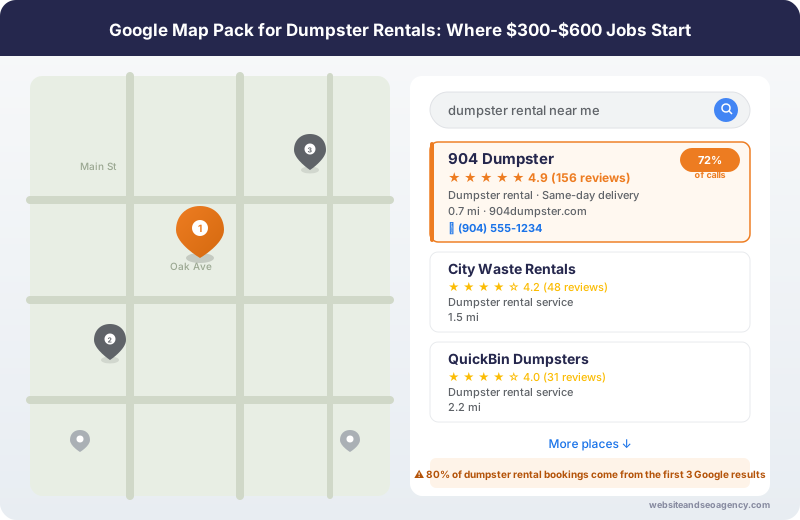
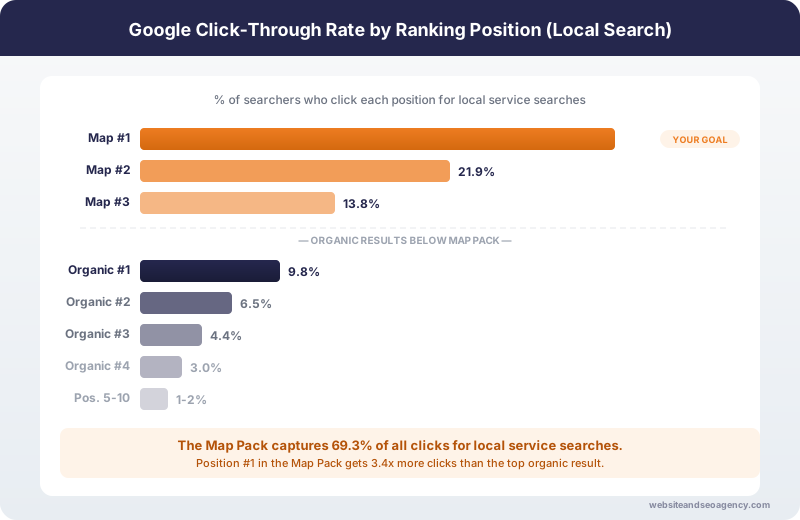
The Map Pack (the top 3 local results that appear with a map) drives significant traffic and calls for local businesses. According to industry data, businesses in the Map Pack receive 44% of clicks for local searches. A strong Google Business Profile is the foundation,getting into that top 3 is worth the effort.
Want to dominate your local market? Our local SEO services have helped businesses achieve Map Pack rankings and 300%+ traffic increases.
The 12 Google Maps Ranking Factors
1. Proximity to the Searcher
Proximity is the most heavily weighted factor. When someone searches "plumber near me," Google prioritizes businesses physically close to that person. You cannot change your location, but you can optimize other factors to compete against closer businesses.
What you can do: Optimize your service area settings accurately. Create location-specific content on your website. Build citations in local directories that reinforce your service areas.
2. Google Business Profile Completeness
Incomplete profiles rank poorly. Google rewards businesses that fill out every available field with accurate, detailed information.
Essential fields to complete:
A fully complete profile signals to Google that you are a legitimate, active business worth showing to searchers.
3. Primary Category Selection
Your primary category is perhaps the single most important field on your profile. It tells Google exactly what your business does and which searches you should appear for.
Best practices:
A plumber should select "Plumber" not "Contractor." An HVAC company should select "HVAC Contractor" not "Home Services."
4. Review Quantity and Quality
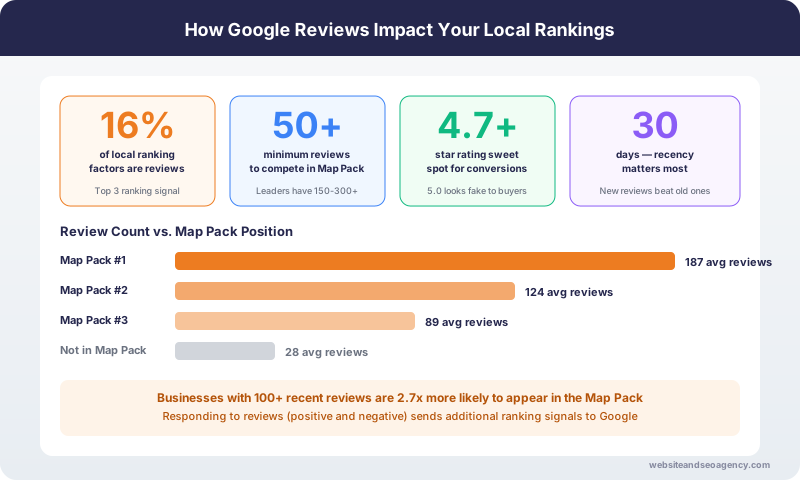
Reviews are a trust signal. Businesses with more reviews and higher ratings tend to rank better and convert more searchers into customers.
Key metrics:
Aim for consistent review acquisition rather than bursts. A business getting 4-5 reviews per month will typically outrank one that got 50 reviews two years ago and none since.
5. Review Keywords and Content
The actual content of your reviews influences which searches you rank for. When customers mention specific services in their reviews, Google associates your business with those terms.
Example: If 10 customers mention "emergency plumber" in their reviews, you become more relevant for emergency plumber searches.
You cannot control what customers write, but you can ask satisfied customers to describe the service you provided.
6. GBP Activity and Engagement
Google tracks how active your profile is. Regular activity signals that your business is operating and engaged with customers.
Activity signals:
Inactive profiles get deprioritized. Set a schedule and stick to it.
7. Website Relevance and Quality
Your website reinforces your GBP signals. Google looks at your website to verify and expand its understanding of your business.
Website factors:
A well-optimized website supports your Maps rankings. A poor website can hold you back.
8. Citations and NAP Consistency
Citations are mentions of your business name, address, and phone number on other websites. Consistent citations across the web reinforce your legitimacy.
Important citation sources:
Inconsistent information (wrong phone number, old address) confuses Google and can hurt rankings.
9. Behavioral Signals
Google tracks how users interact with your listing. High engagement signals that your business satisfies searcher intent.
Behavioral factors:
Compelling photos, accurate information, and good reviews all improve these behavioral metrics.
10. Local Link Building
Links from local websites carry significant weight for local rankings. These reinforce your geographic relevance.
Valuable local links:
One high-quality local link can be worth more than dozens of generic directory links.
11. Business Attributes
Attributes are the checkboxes on your profile (accepts credit cards, wheelchair accessible, Black-owned, etc.). They help you appear for filtered searches.
Common attributes:
Fill out every applicable attribute. Some searchers filter by these options.
12. Age and History
Older, established businesses with clean histories tend to rank better than brand new businesses. This is not a factor you can directly influence, but it emphasizes the importance of maintaining good standing over time.
What helps:
If you are a new business, focus on the factors you can control while your profile ages.
Which Factors Matter Most?
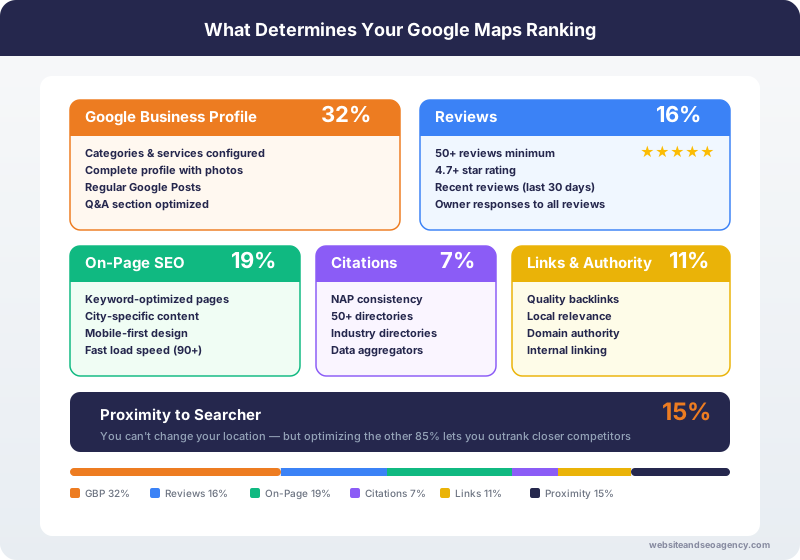
Based on industry studies and our own client data, here is a rough weighting:
The good news: you can influence everything except proximity. Businesses routinely outrank closer competitors by excelling in other factors.
Common Myths About Google Maps Rankings
Myth: Keywords in Your Business Name Help Rankings
While businesses with keywords in their name sometimes rank well, adding keywords violates Google guidelines and can get you suspended. Focus on legitimate optimization instead.
Myth: More Categories Are Always Better
Adding irrelevant categories can actually hurt you. Only select categories that accurately describe services you actively provide.
Myth: Paid Ads Boost Organic Map Rankings
Google Ads and organic Maps rankings are separate systems. Paying for ads does not improve your organic visibility.
Myth: You Need Thousands of Reviews to Rank
While more reviews help, quality and recency matter more than sheer quantity. A business with 50 recent reviews can outrank one with 500 old reviews.
How to Improve Your Google Maps Rankings
Quick Wins (Week 1-2)
Short-Term (Month 1-2)
Long-Term (Ongoing)
Ready to Dominate Your Local Map Pack?
Ranking in the Google Maps 3-Pack transforms local businesses. More visibility means more calls, more customers, and more revenue.
Our local SEO services include complete Google Maps optimization. We handle the strategy, implementation, and ongoing management so you can focus on running your business.
Get a Free Local SEO Audit to see exactly where you stand and what it takes to reach the Map Pack in your market.
Want Professional Help?
Learn more about our Local SEO Services services and how we can help your business dominate local search results.
Explore Local SEO Services ServicesFrequently Asked Questions
What is the most important Google Maps ranking factor?
How do I get my business to show up on Google Maps?
Do Google reviews help Maps rankings?
How long does it take to rank on Google Maps?
Can I rank in the Map Pack without a physical storefront?
About the Author
Web Wise Team
The Web Wise Team has helped hundreds of local businesses achieve Map Pack visibility through data-driven local SEO strategies.