
What Is Local Link Building and Why Does It Matter?
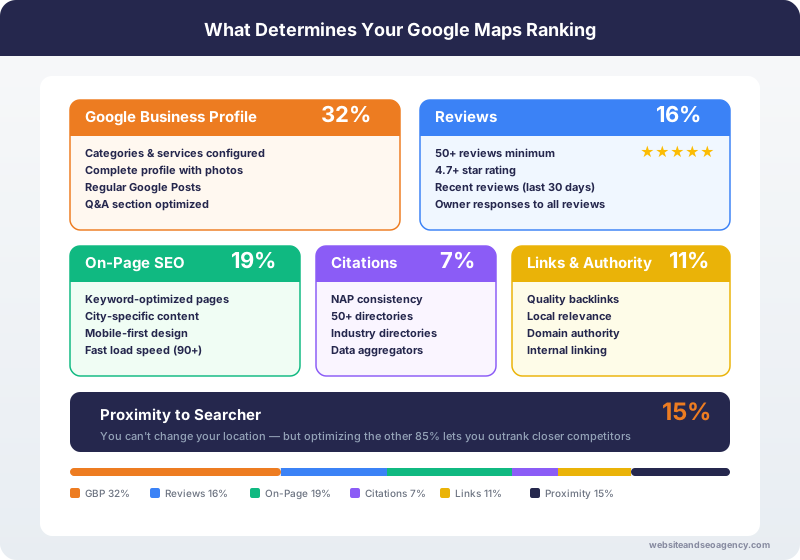
Local link building is the process of earning backlinks from geographically relevant websites in your community, including local news outlets, business associations, community organizations, schools, charities, and other local businesses. These links signal to Google that your business is a recognized, trusted part of the local community, which directly impacts your local search rankings in both the Map Pack and organic results.
Backlinks have been a top-3 Google ranking factor since the search engine launched, and that has not changed. What has evolved is Google's ability to evaluate link quality and relevance. For local businesses, links from local sources carry more geographic relevance than links from national or unrelated websites.
Think of it this way: if the local newspaper, your Chamber of Commerce, and three community organizations all link to your website, Google has strong evidence that your business is established in that area. This geographic trust supports everything else in your local SEO strategy.
How Local Backlinks Differ from General Backlinks
Not all backlinks are created equal for local SEO. Understanding the difference helps you focus your effort on links that actually improve local rankings.
Geographic Relevance
A link from your city's newspaper carries geographic relevance that a link from a national blog does not. Google uses the linking website's geographic association to reinforce your business's connection to a specific area. This is why a link from "Austin Business Journal" is more valuable for an Austin-based business than a link from a generic marketing blog with higher domain authority.
Local Authority Signals
Links from locally authoritative sources (government websites, educational institutions, established local organizations) carry a trust signal that is difficult to replicate. A .gov or .edu link from a local entity tells Google your business is trusted at an institutional level.
Community Validation
When multiple local organizations link to your business, it creates a pattern of community validation. Google recognizes this pattern and rewards businesses that are genuinely integrated into their local ecosystem.
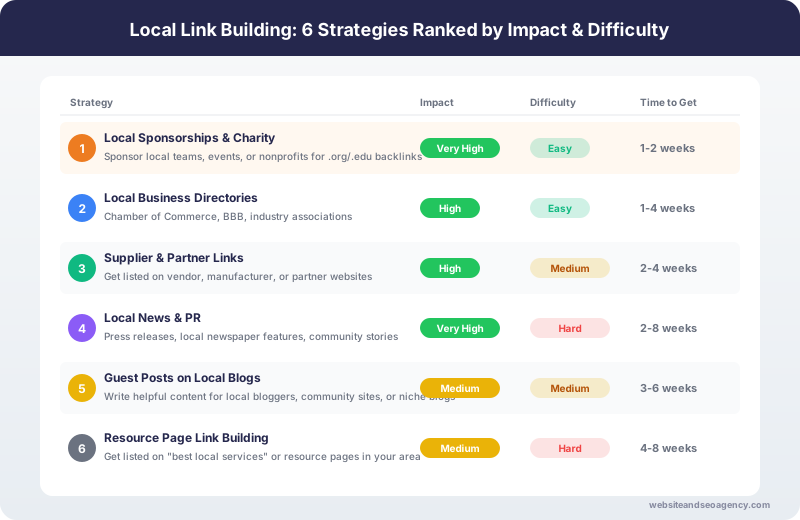
15 Local Link Building Strategies That Work
These strategies are ordered by accessibility and effectiveness. Start with the easiest opportunities and work down to more advanced tactics.
Strategy 1: Join Your Local Chamber of Commerce
Chambers of Commerce almost always have an online member directory with links to member websites. This is one of the easiest and most valuable local links you can earn.
How to execute:
Link value: High. Chamber websites are locally authoritative, well-maintained, and trusted by Google.
Strategy 2: Sponsor Local Events
Local events almost always list their sponsors on their website, often with logos and links. This is the most reliable local link building strategy because organizations genuinely want to acknowledge their sponsors publicly.
High-value sponsorship opportunities:
Typical cost: $100-$1,000+ depending on event size and sponsorship tier. Even small sponsorships ($100-$250) typically earn a link on the event page.
Outreach template:
"Hi [Event Organizer], I am [Name] from [Business]. We would love to sponsor [Event Name] this year. We are passionate about supporting our local community in [City]. Could you share your sponsorship packages and benefits? We are particularly interested in website recognition and linking."
Strategy 3: Sponsor Local Sports Teams
Youth sports leagues, adult recreational leagues, and school athletic programs actively seek sponsors. Most list sponsors on their league or team websites with links.
How to execute:
This strategy also generates brand visibility in your exact service area through team uniforms, banners at fields, and parent community word-of-mouth.
Strategy 4: Get Listed on Supplier and Manufacturer Websites
Many suppliers, manufacturers, and distributors maintain "dealer locator" or "certified installer" pages on their websites. These pages link to businesses that carry or install their products.
Examples by industry:
How to execute: Contact your suppliers and ask to be listed on their website. Many have formal programs; others will add you by request.
Strategy 5: Create Local Resource Content
Creating genuinely useful content about your local area earns natural links from community websites, bloggers, and social media.
Content ideas that earn local links:
Why this works: When you create genuinely useful local content, community websites, neighborhood associations, and local bloggers naturally reference and link to it as a resource for their audiences.
Strategy 6: Offer Expert Commentary to Local Media
Local journalists frequently need expert sources for stories about home improvement, seasonal preparation, energy efficiency, and local development. Positioning yourself as a local expert earns high-authority links from news websites.
How to become a local media source:
Outreach template:
"Hi [Reporter Name], I am [Name], owner of [Business] in [City]. I have been serving the [City] area for [X years] and I wanted to introduce myself as a resource for any future stories about [your industry]. Whether you need expert commentary on [specific topic] or local data on [relevant trend], I am happy to help. No strings attached, just want to be a useful source for your reporting."
Strategy 7: Guest Post on Local Blogs
Local blogs covering community news, home improvement, real estate, and lifestyle topics often accept guest contributions from local business owners.
How to find local blog opportunities:
How to pitch:
Strategy 8: Partner with Complementary Local Businesses
Cross-referral partnerships with complementary businesses often include linking to each other's websites on "recommended partners" or "preferred providers" pages.
Partnership link opportunities:
Important: Make these genuine partnerships, not link exchange schemes. Google can identify manipulative reciprocal linking. The links should exist because you genuinely recommend each other's businesses.
Strategy 9: Contribute to Local Nonprofit and Charity Websites
Donating time, money, or services to local nonprofits often earns mentions and links on their websites. Many nonprofits have sponsor, donor, or volunteer recognition pages.
How to build nonprofit relationships:
Strategy 10: Get Featured in Alumni and School Directories
If you or your employees graduated from local schools, colleges, or trade programs, many of these institutions feature alumni businesses on their websites.
How to leverage educational connections:
Strategy 11: Earn Links from Local Government Websites
Some local government websites maintain business directories, preferred vendor lists, or community resource pages that include links to local businesses.
Opportunities:
Strategy 12: Create a Scholarship Program
Creating a small local scholarship (even $500) and hosting the application on your website earns links from schools, guidance counselor resource pages, and scholarship listing websites.
How to execute:
Strategy 13: Host or Co-Host Local Events
Hosting educational workshops, community events, or networking meetups generates links from event listing websites, local calendars, and community pages.
Event ideas:
List your events on Meetup, Eventbrite, Facebook Events, and local community calendars for additional links.
Strategy 14: Respond to HARO Queries
HARO (Help A Reporter Out) connects journalists with expert sources. Responding to relevant queries can earn links from major publications, industry websites, and local news outlets.
HARO tips:
Strategy 15: Build Relationships with Local Influencers
Local social media influencers, community figures, and micro-influencers in home improvement, real estate, or lifestyle niches can generate both links and referral traffic.
How to connect:
What to Avoid in Local Link Building
These practices can result in Google penalties that damage your rankings:
Never Buy Links
Paying for links from link brokers, private blog networks, or "SEO packages" that promise hundreds of backlinks violates Google's guidelines. The short-term gain is not worth the long-term risk of a penalty that can take months to recover from.
Avoid Link Exchange Schemes
Organized "I will link to you if you link to me" arrangements are detectable by Google. Genuine partnership links are fine, but avoid formalized link exchange networks.
Skip Low-Quality Directories
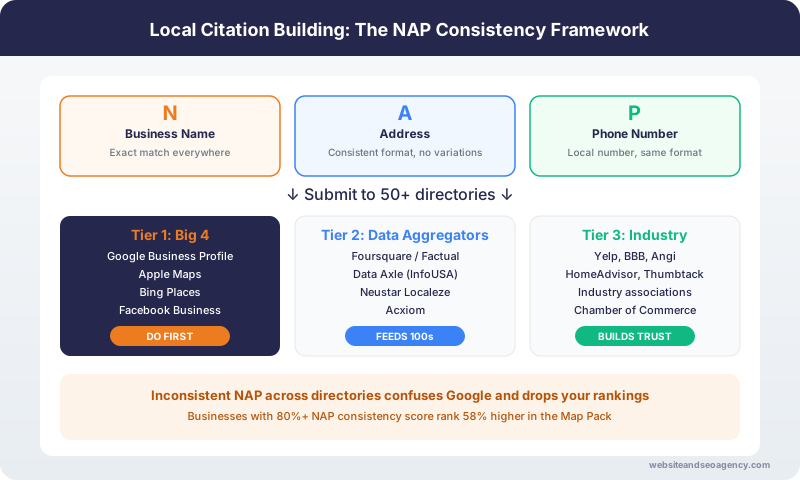
Submitting to hundreds of low-quality, spammy directories does not help and can hurt. Focus on the authoritative directories listed in our local citations guide instead.
Do Not Use Irrelevant Anchor Text
When earning links, let the linking website choose natural anchor text. Do not request that every link use your target keyword as anchor text (e.g., "best plumber in Austin"). This looks manipulative and can trigger penalties.
Avoid Links from Penalized Websites
If a website looks spammy, has low-quality content, or appears to exist solely for link building purposes, avoid getting a link from it. Use common sense: would you be proud to be associated with this website?
Measuring Local Link Building Success
Track these metrics to evaluate your local link building efforts:
Link metrics:
Ranking metrics:
Business metrics:
Building a Sustainable Local Link Building Process
Local link building is not a one-time project. Build it into your ongoing marketing:
Monthly: Identify 2-3 new link opportunities, follow up on pending outreach, monitor new links earned
Quarterly: Sponsor a local event, publish a local resource article, audit your backlink profile for new and lost links
Annually: Renew Chamber of Commerce and association memberships, evaluate sponsorship ROI, set link building goals
The most successful local businesses treat link building as a natural extension of their community involvement rather than a separate SEO tactic. When you genuinely participate in your local community, links follow naturally.
Ready to Strengthen Your Local Link Profile?
Start with the easiest wins: join your Chamber of Commerce, sponsor a local event, and reach out to your suppliers about dealer listings. These three actions alone can earn 5-10 high-quality local backlinks.
For a comprehensive local link building strategy, our local SEO services include ongoing link building as part of every campaign, tailored to your specific market and competitive landscape.
Get a Free Backlink Analysis and we will audit your current link profile, compare it against your top local competitors, and identify the highest-value link building opportunities for your business.
Want Professional Help?
Learn more about our Local SEO services and how we can help your business dominate local search results.
Explore Local SEO ServicesFrequently Asked Questions
What is local link building?
Why are local backlinks important for SEO?
How many local backlinks do I need?
How long does local link building take to show results?
Can local link building hurt my rankings?
About the Author
Web Wise Team
The Web Wise Team has built hundreds of local backlinks for service businesses across the US and UK. Local link building is a core component of our local SEO campaigns.