
What Is a Local SEO Audit and Why Does It Matter?
A local SEO audit is a systematic review of every factor that affects your business's visibility in local search results, including Google Maps, the local pack, and location-based organic results. Unlike a setup checklist that tells you what to build from scratch, an audit examines your existing presence to find specific problems that are actively hurting your rankings. Fixing these problems often produces faster results than adding new optimizations because you are removing barriers rather than building on a weakened foundation.
Our local SEO services always begin with a comprehensive audit because we have found that most businesses have fixable issues they do not know about. If you have already worked through our local SEO checklist, this audit guide helps you verify that everything is working correctly and catch issues that develop over time.
How Do You Audit Your Google Business Profile?
Your Google Business Profile (GBP) is the single most important element for local search visibility. Issues here directly impact your map pack rankings and can be the difference between appearing on page one and being invisible.
Check Profile Completeness
Log into your Google Business Profile Manager and verify every field is filled out completely:
Primary category: Is it the most specific category for your business? "Plumber" is better than "Home Services." Check what your top-ranking competitors use.
Secondary categories: Have you added every relevant secondary category? Most businesses should have 3 to 8 categories total.
Business description: Is it 750 words with natural keyword usage? Does it mention your city, primary services, and differentiators?
Services list: Does it include every service you offer with descriptions?
Products section: If applicable, are products listed with descriptions and pricing?
Business hours: Are they accurate? Are special hours set for holidays?
Photos: Do you have at least 25 high-quality photos including storefront, interior, team, and work examples? Photos uploaded in the last 30 days?
Posts: Have you published GBP posts in the last 7 days? Regular posting signals an active business.
Check for GBP Issues
Duplicate listings: Search for your business name on Google Maps to ensure you do not have multiple listings. Duplicate GBP listings confuse Google and split your reviews.
Ownership and access: Verify that you own the listing and that no former employees or agencies have unauthorized access.
Suspended or limited listing: Check for any flags, suspensions, or reduced visibility notices in your GBP dashboard.
Review response rate: Are all reviews (positive and negative) responded to? Google factors response rates into local ranking signals.
For a deeper dive into GBP optimization, our Google Business Profile guide covers every optimization technique in detail.
How Do You Audit Citation Consistency?
NAP (Name, Address, Phone number) inconsistencies across directories are the most common local SEO issue we find. Even small variations like "Street" vs "St." or a different phone number format can weaken your local signals.
Step 1: List Your Top 20 Citations
Check your business listing on the most important directories:
Step 2: Compare NAP Across All Listings
For each listing, verify that your business name, address, and phone number match exactly. Look for:
Name variations: "Bob's Plumbing LLC" vs "Bob's Plumbing" vs "Bobs Plumbing LLC"
Address inconsistencies: "Suite 200" vs "Ste 200" vs "#200" or different street abbreviations
Phone number differences: Old phone numbers, different formats, tracking numbers
Website URL mismatches: HTTP vs HTTPS, www vs non-www, different landing pages
Step 3: Fix Inconsistencies
Update every listing to use your exact, standardized NAP. Use the same format everywhere. The format you use on your Google Business Profile should be the standard all other listings match.
Step 4: Remove Duplicate Listings
Search for duplicate listings on each platform. Duplicates confuse search engines and split your reviews and citations. Most platforms have a process for reporting and removing duplicate listings.
For a complete guide to citation building, our local citations guide covers the top 50 citation sources and how to build them correctly.
How Do You Audit Your Website for Local SEO?
Your website supports your local search visibility through location-specific content, technical optimization, and internal linking.
Local Keyword Audit
Check that your most important service pages target local keywords:
Title tags: Do they include your city or service area? "Plumber in Dallas" is stronger than just "Plumbing Services."
H1 headings: Does each service page have a unique H1 that includes the service and location?
Content: Do service pages mention your city, neighborhood, and service area naturally within the content? At least 500 words per service page?
Location pages: If you serve multiple areas, does each area have its own dedicated page with unique content (not just the city name swapped)?
Technical Local SEO Audit
Schema markup: Does your homepage include LocalBusiness schema with your NAP, hours, and service area? Check using Google's Rich Results Test.
Page speed: Test your homepage and key service pages with Google PageSpeed Insights. Aim for scores above 70 on both mobile and desktop. Our technical SEO services can fix speed issues.
Mobile experience: Browse your site on a phone. Is everything readable without zooming? Do buttons and links have enough spacing for touch targets? Does the phone number click to call?
Internal linking: Do your blog posts link to relevant service pages? Does your navigation make it easy for users (and search engines) to find every important page?
Content Gap Analysis
Compare your website content against your top three local competitors:
Service pages: Do competitors have pages for services you do not have pages for?
Location pages: Do competitors have dedicated pages for cities or neighborhoods you serve but have not created pages for?
Blog content: Are competitors publishing content that targets valuable keywords you are not covering?
How Do You Audit Your Local Backlink Profile?
Local backlinks are links from websites in your geographic area or industry. They carry extra weight for local SEO because they signal local relevance.
Analyze Current Local Links
Use Google Search Console's Links report to see your current linking domains. Identify which links come from local sources:
Local links to look for:
Compare Against Competitors
Search for your top competitors' websites on free backlink checkers (OpenLinkProfiler, Ahrefs Webmaster Tools free version). Identify local links they have that you do not. These represent opportunities you can pursue.
Identify Link Building Opportunities
Based on your analysis, create a prioritized list of local link opportunities:
Our local link building guide covers the most effective strategies for earning local backlinks.
How Do You Audit Your Review Profile?
Reviews impact both rankings and conversion rates. A review audit helps you understand how your review presence compares to competitors.
Review Metrics to Check
Total review count vs competitors: If your top competitor has 150 Google reviews and you have 30, closing that gap should be a priority.
Average rating: Aim for 4.0 or higher. Below 4.0 hurts both rankings and click-through rates.
Review recency: Google values fresh reviews. If your most recent review is from 6 months ago, you need a review generation strategy.
Review platforms: Check your ratings on Google, Yelp, Facebook, and any industry-specific review sites. Inconsistency across platforms can signal authenticity issues.
Response rate: Are you responding to every review? Non-response to negative reviews is particularly damaging.
Our Google reviews guide provides a complete strategy for generating and managing reviews effectively.
How Do You Audit Local Rankings?
Understanding where you currently rank for your target keywords is essential for measuring improvement.
Track Your Map Pack Rankings
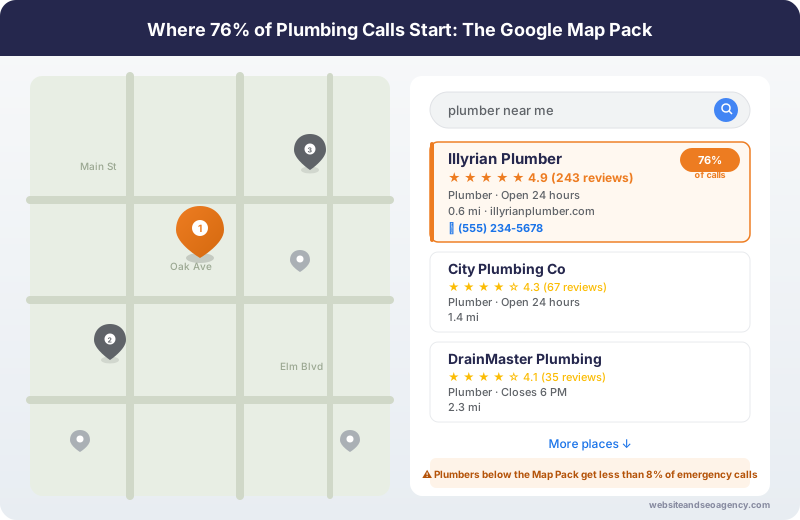
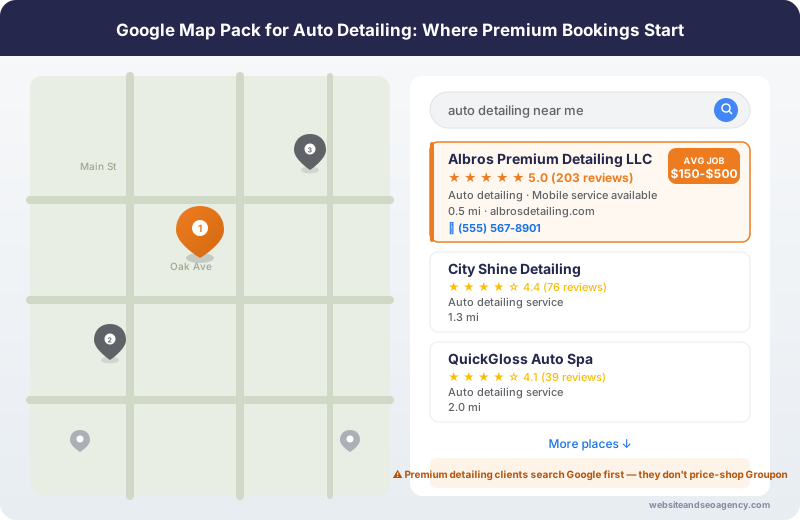
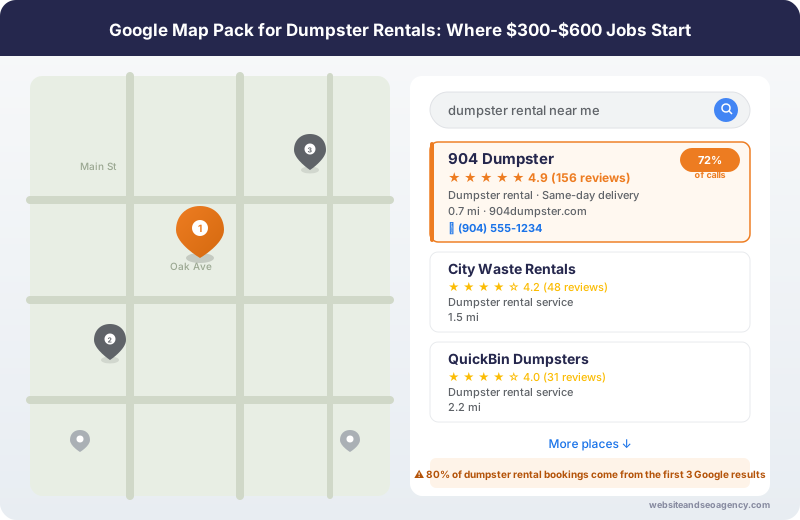
Search for your primary keywords on Google (in an incognito browser) and note whether you appear in the local map pack (the top three map results). Track these separately from organic rankings because the factors that influence map pack visibility differ from organic ranking factors.
Track Organic Local Rankings
Check your rankings for key service plus location keywords. Google Search Console shows your average position for queries your site appears for. For more detailed tracking, use a rank tracking tool that supports local monitoring.
Monitor the Google Maps Ranking Factors
The Google Maps ranking factors that most influence your map pack position include relevance (how well your GBP matches the search), distance (how close you are to the searcher), and prominence (your overall online reputation). Your audit should assess all three.
What Should You Do After the Audit?
Prioritize fixes based on impact and effort:
Quick wins (do first):
Medium-term fixes (next 30 days):
Ongoing improvements:
Ready for a Professional Local SEO Audit?
A thorough local SEO audit reveals opportunities that can significantly improve your rankings and lead generation. While this guide covers the fundamentals, our professional audits dig deeper with enterprise tools and industry-specific analysis.
Our local SEO services include a comprehensive audit as part of every engagement, plus ongoing monitoring to catch issues before they impact your visibility.
Get a Free Local SEO Audit and we will analyze your Google Business Profile, citation consistency, website optimization, backlink profile, and review presence, then deliver a prioritized action plan.
See full pricing and package details — local SEO starts at $480/month. Want your business showing up in AI-generated answers on Google AI Overviews and ChatGPT too? Explore our AI Search Optimization (AEO/GEO) services.
Want Professional Help?
Learn more about our Local SEO services and how we can help your business dominate local search results.
Explore Local SEO ServicesFrequently Asked Questions
How do I audit my local SEO?
What tools do I need for a local SEO audit?
How often should you audit local SEO?
What are the most common local SEO mistakes?
How is a local SEO audit different from a regular SEO audit?
About the Author
Web Wise Team
The Web Wise Team runs local SEO audits for every new client engagement. This guide reflects the exact process we use to identify ranking issues and create actionable improvement plans.